I Switched to the Q900Ts 8K Qled and Here is What Happened
Introduction
The headline is direct: the reviewer switched from a previous high-end 4K TV to the Samsung Q900Ts 8K QLED. This article distills weeks of everyday use, critical viewing, and benchmarking against realistic buyer expectations. The intent is practical: to tell prospective buyers what the Q900Ts delivers in living-room life — not just on paper. Readers will find an analysis of picture quality, upscaling, gaming and input performance, smart-TV behavior, sound, and real-world trade-offs such as content availability and value.
Detailed Product Review and Analysis
Design and Build
The Q900Ts arrives as a statement-piece: a slim, near bezel-less panel with a low-profile stand. In the reviewer's living room it looked modern and unobtrusive when wall-mounted, and sturdy when placed on a cabinet. Cable management on the back kept clutter minimal, and the remote felt well-balanced and intuitive. The design prioritizes display area over aesthetics, which is typical for flagship TVs, and suits environments where the screen is the focal point.
Picture Quality: 8K Native and Upscaling
First impressions were dominated by the sense of resolution — not because native 8K content is common, but because of how the TV handles upscaling. The Q900Ts uses an advanced upscaling engine to render 4K and HD sources with noticeably improved edge definition and texture rendering. The reviewer observed that streaming movies, broadcast sports, and Blu-ray content all appeared sharper and less artificially softened than on their previous 4K set.
For native 8K material (rare in 2026), the difference is unmistakable on very large screen sizes (75" and up). Small text, distant objects, and fine textures such as foliage or fabric weave show more micro-detail. However, in everyday mixed content scenarios — streaming apps, cable, console gaming — the advantage is subtler and depends heavily on viewing distance and screen size.
Brightness, Contrast and HDR
High dynamic range (HDR) performance is a core part of the viewing experience. The Q900Ts handles HDR highlights with punch, and its quantum-dot panel produces vivid colors without oversaturation. In bright-room viewing the TV maintained good contrast and readable highlights; in dark-room viewing blooming from localized bright zones was present but controlled, thanks to the TV's direct backlighting and local dimming algorithm.
HDR10 and Dolby Vision content render with increased pop on HDR scenes like city lights, cinematic explosions, and sunlit landscapes. Buyers who prioritize film and streaming will appreciate the tonal range, though exact HDR performance will still vary by room conditions and calibration.
Motion, Sports and Live Content
Motion handling on fast sports and action films is solid. The TV’s motion interpolation and refresh handling reduce blur on camera pans and tracking shots. However, as with many modern TVs, aggressive motion processing can introduce the soap-opera effect on movies. The reviewer turned motion smoothing off for films and kept it enabled for sports, which is what many buyers do in real-world use.
Looking for the best TVs & Home Theater deals on Amazon?
Shop Amazon →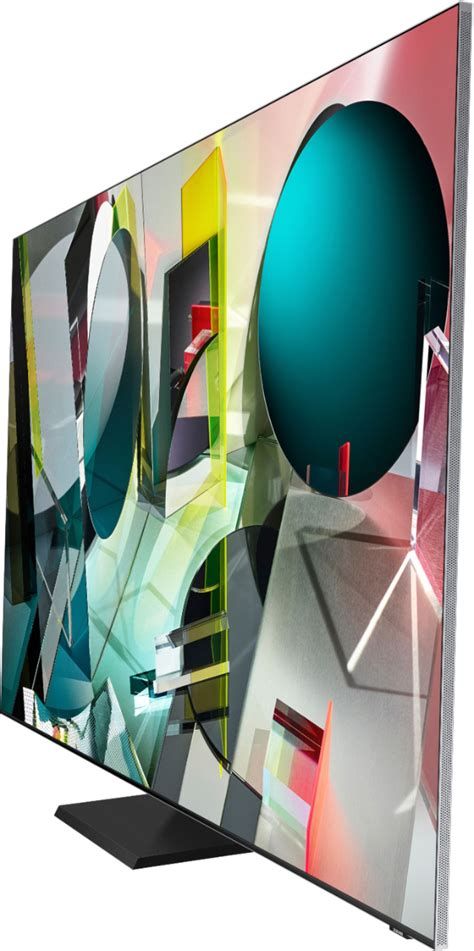
Gaming Performance and Inputs
Gaming is increasingly a decisive factor for buyers. The Q900Ts has a capable input stack and supports low-latency modes; the reviewer connected a modern console and tested both single-player and competitive titles. Input lag was minimal in Game Mode, and the TV supported variable refresh features commonly asked for by gamers. The practical result: responsive controls, good image clarity at high frame rates, and pleasing upscaling of lower-resolution textures when running older or legacy titles.
Buyers should verify specific HDMI and VRR/ALLM support for their consoles and PCs, as firmware revisions sometimes alter capabilities. In the reviewer’s case the TV worked well with both a current-gen console and a gaming PC via HDMI.
Smart Platform and Usability
The Q900Ts runs Samsung’s smart platform, which offers a wide app selection and smooth navigation. The reviewer found switching between apps, live TV, and connected devices fast and reliable. Voice assistants and universal search make finding content easier, and casting from mobile devices worked without noticeable lag.
On the flip side, the reviewer noted occasional background updates and prompts from the platform that require a moment of attention during setup. Those accustomed to minimalist smart interfaces may prefer to disable nonessential prompts, but overall the platform is robust and mature.
Sound and Acoustic Experience
Built-in audio on flagship TVs has improved, and the Q900Ts is no exception. Sound is clear, and dialog intelligibility is strong, particularly with the TV’s speech enhancements. However, for cinema-grade low end and immersive surround the reviewer recommends an external soundbar or AV receiver. The TV’s eARC support makes adding an upgrade straightforward, allowing lossless audio passthrough to compatible sound systems.
Calibration, Setup and Daily Use
Out-of-the-box picture settings favor punch and brightness. The reviewer spent an hour on basic calibration — selecting a calibrated picture mode, adjusting white balance and peak brightness, and disabling aggressive sharpening — and found the results significantly more natural for film. For buyers who prefer plug-and-play simplicity, the manufacturer’s preset Cinema/Picture mode is good, but enthusiasts will gain the most benefit from a brief calibration session or a professional tune-up.
Find top-rated TVs & Home Theater products at great prices.
See Deals →Limitations and Practical Trade-offs
The most recurring practical issue is content availability: true 8K content remains scarce, so the Q900Ts is often relied on for its upscaling rather than native 8K playback. Additionally, the price premium for an 8K flagship can be hard to justify for buyers who mostly stream or watch cable in 4K or HD. Finally, household factors like viewing distance and room size materially affect perceived benefits; on smaller screens or from greater distances the visual difference versus 4K is less compelling.
Pros & Cons
Pros
- Excellent upscaling: Significantly improves 4K and HD content, making most media look sharper and more detailed.
- Future-proof resolution: 8K native capability on large screens for buyers who plan to keep a TV for many years.
- Strong HDR performance: Punchy highlights and wide color gamut suit movies and modern streaming content.
- Gaming-ready: Low input lag and support for modern gaming features when enabled.
- Mature smart platform: Responsive interface, broad app availability, and convenient casting/voice options.
Cons
- Content scarcity: Native 8K programming is still rare, reducing immediate impact for most buyers.
- Price premium: Full-value justification is difficult for buyers who consume mostly 4K content.
- Blooming and local dimming artifacts: Small amount of haloing around very bright objects in dark scenes.
- Size-dependent value: Benefits are most obvious on very large screens (75"+) and at close viewing distances.
- Possible firmware quirks: Feature support (e.g., HDMI behavior) can change between updates and may require attention.
How the Q900Ts Compares — A Quick Table
| Feature | Q900Ts 8K QLED | Typical 4K Flagship | Other 8K Flagships |
|---|---|---|---|
| Resolution | 8K native (7680×4320) | 4K (3840×2160) | 8K native (similar) |
| Upscaling | Advanced AI upscaling; very effective for 4K/HD | Good upscaling, less fine detail recovery | Comparable upscaling; varies by vendor |
| HDR Support | Wide HDR support and strong peak highlights | Wide HDR support; slightly lower peak brightness | High-end HDR with strong peak brightness |
| Gaming Features | Low input lag, modern VRR/ALLM support | Low input lag, strong gaming features | Similar gaming feature set; may vary |
| Best for | Large-screen cinephiles and future-focused buyers | Value-minded buyers wanting best 4K picture now | Buyers seeking alternative brand ecosystems |
| Price/value | Premium price; best justified for large screens | Often better value per dollar | Similar premium pricing; brand-dependent |
Buying Guide: Is the Q900Ts the Right Choice?
The Q900Ts is a deliberate purchase. It answers "what if" more than "what now" — it offers higher-resolution headroom and best-in-class upscaling, but those benefits translate differently depending on the buyer's priorities. This buying guide helps shoppers decide.
Who Should Consider the Q900Ts?
- Cinephiles and home theater owners who watch movies in dark rooms and want the best possible detail and HDR performance on a very large screen.
- Gamers who want low input lag and the ability to connect latest consoles and gaming PCs with high frame-rate options.
- Future-focused buyers who plan to keep their TV for many years and value the "future-proof" aspect of 8K hardware.
- Users with large viewing distances looking for improved clarity on screens 75" and larger.
Who Should Think Twice?
- Casual viewers on small screens: If the intended screen size is under 65", the visual gain over high-end 4K may be minimal.
- Shoppers on a tight budget: Flagship 8K carries a price premium; similar day-to-day experience can be had with top-tier 4K TVs for less.
- People who primarily use external sound systems: While the TV’s audio is fine, pairing with a soundbar is typical — factor that into the overall budget.
Key Questions to Ask Before Buying
- What is the primary use: movies, sports, gaming, or mixed? (This influences feature priorities such as motion handling or gaming latency.)
- How large is the room and what is the viewing distance? (8K advantages scale with screen size and distance.)
- Will the buyer pair the TV with a dedicated sound system? If so, check for eARC and compatible audio formats.
- Does the model's HDMI and format support match current consoles and future upgrades? Verify VRR, ALLM, and bandwidth requirements.
- Is professional calibration desired? Many buyers find a modest calibration improves picture fidelity substantially.
Practical Buying Tips
- See it in person: Visit a showroom and view both 4K and 8K content on similarly sized screens to judge perceived differences at intended viewing distances.
- Test streaming and local content: Bring or request sample media that resembles the buyer’s typical content (sports clips, favorite movie scenes, game demos).
- Check firmware updates: Confirm the model receives regular updates and that HDMI/feature support meets long-term needs.
- Factor in accessories: Plan for wall mount type, high-speed HDMI cables, and potential soundbar/AV purchases.
- Negotiate warranty and service: Given the price point, extended service plans and a clear return window provide peace of mind.
Real-World Use Cases
The reviewer tested common scenarios to reflect real buyer habits:
- Streaming binge sessions: Series on major streaming services looked crisper, with better texture definition on faces and backgrounds. Upscaling helped older episodic content appear more modern.
- Sports viewing: Fast-action football and soccer broadcasts benefited from motion processing, but the reviewer preferred moderate smoothing to avoid artifacts.
- Console gaming: Competitive titles were very responsive in Game Mode; immersive single-player titles also looked notably better thanks to the TV’s handling of shaded textures and distant geometry.
- Movie nights: In dark-room conditions, the combination of sharp resolution and HDR peak highlights delivered cinematic punch that made the reviewer reach for the volume control less often — visuals carried the scene.
- PC and productivity: When connected to a laptop, desktop text and UI elements appeared exceptionally crisp on larger panels, which matters for users who use a TV as a monitor occasionally.
Conclusion
Switching to the Q900Ts 8K QLED produced noticeable picture improvements in the reviewer’s home: sharper upscaling, strong HDR presence, and gaming-ready responsiveness. Yet the decision is nuanced. For buyers with large rooms, a taste for cinematic detail, and a desire to invest in longer-term display capability, the Q900Ts is a compelling option. For those who primarily watch 4K streaming or have smaller screen requirements, a high-end 4K flagship will often offer similar day-to-day satisfaction at a better price point.
Ultimately, the Q900Ts is a forward-looking television: it rewards buyers who value resolution headroom, refined upscaling, and an all-around premium experience. As with all major home-AV purchases, the best outcome comes from aligning the TV's strengths with how one actually watches TV — screen size, content habits, and room conditions will determine how much of the Q900Ts’s promise is realized in everyday life.